STUDY IN IRELAND
Pursue Your Degree in Ireland – A Land of Scholars & Innovation
Ireland has a longstanding reputation for high-quality education, built on a strong commitment to academic excellence. With one of the world’s best education systems, the country is internationally recognized for producing successful graduates. Over 80% of universities and colleges are government-funded, ensuring high standards and accessibility. Often called the “land of saints and scholars,” Ireland’s higher education institutions consistently rank among the top in the world for educational quality and global recognition.

Start Your Ireland Journey
Fill out the form and our experts will contact you shortly
FACTS ON EDUCATION IN IRELAND
Most peaceful country in the world
(2025 Global Peace Index)
Most popular study abroad destination
(Open Doors Report, 2024)
International students, totaling over 35,000 students from across the globe.
(HEA Ireland, 2024)
Of universities and colleges are government-funded, ensuring high standards and accessibility.
(Education in Ireland)
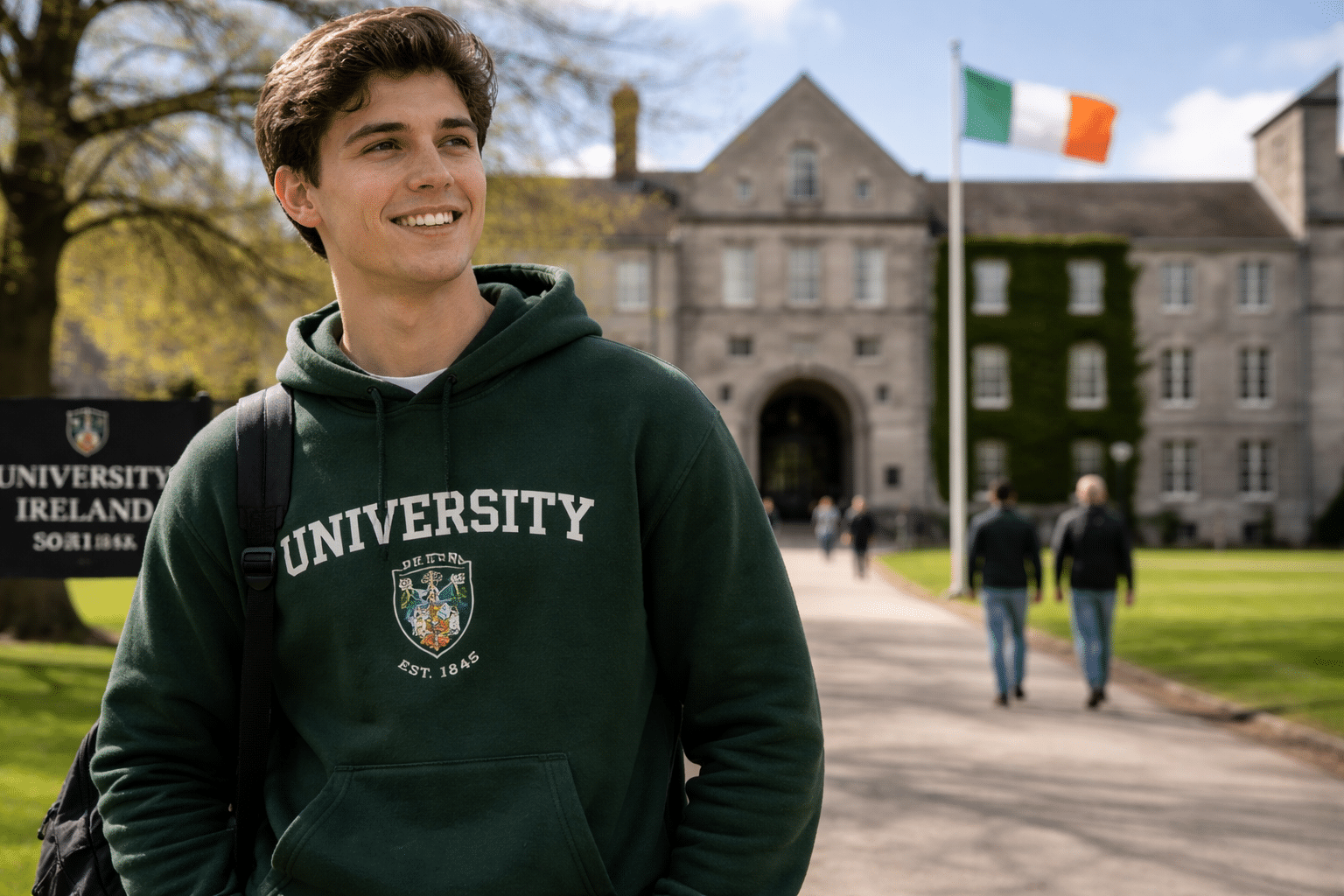
WHY STUDY IN IRELAND
An ideal mix of academic excellence, practical skills, and global exposure
- Home to highly respected universities with a rich academic heritage
- Globally recognised degrees valued by employers worldwide
- Shorter course durations save time and reduce costs
- Post-study work opportunities through Ireland’s Graduate Route
- Focus on creativity, critical thinking, and independent learning
- Strong student support and vibrant international student networks
IRELAND
Life in IRELAND
Experience education in a country combining rich heritage, innovative teaching, and international exposure

Economy
Ireland boasts a robust, innovation-driven economy, making it an attractive destination for students seeking global career pathways.

Culture
A vibrant blend of history and innovation—home to centuries-old castles, literary landmarks, and over 1,000 cultural festivals. Ireland welcomes students from 120+ nationalities, creating a diverse and inclusive environment.

Healthcare
International students in Ireland have access to public healthcare through the HSE (Health Service Executive), one of Europe’s well-established health systems. Most students report high satisfaction with healthcare services and support during their studies.
Language
As an English-speaking country (with Irish as a national language), Ireland offers full immersion in the world’s most widely used business language, helping students gain fluency, confidence, and global career prospects.

Safety
Ireland is ranked the 2nd most peaceful country globally (Global Peace Index 2025) and offers secure campuses, dedicated student support, and a safe living environment for international students.

Food
From traditional Irish stews and soda bread to diverse global flavours—Indian, Chinese, Mediterranean, African and more—Ireland offers over 60 international cuisines across its cities and towns.

Transportation
One of Europe’s most accessible public transport systems, Ireland has 144 rail stations and well‑connected bus networks linking cities and towns.
COST OF EDUCATION
Invest in globally recognised education with long-term value
Accommodation
- On-campus: €700-€1000/month
- Private rentals: €550-€700/month (excluding utilities)
Healthcare
- Private health insurance is mandatory for all non-EU/EEA students.(€160–€500/year)
COST
Cost of Education
- Tuition Fees: CAD 14,000–80,000/year (undergraduate), CAD 15,000–70,000/year (postgraduate)
- Accommodation Costs: CAD 3,000–7,000/semester (on-campus), CAD 900–2,700/month (off-campus)
- Living Expenses: CAD 1,200–1,800/month
- Health Insurance: CAD 600–1,000/year
- Miscellaneous Costs: CAD 2,500/y
ACCOMMODATION
Diverse and Affordable Accommodation Choices to Suit Every Student’s Lifestyle
University-Managed Housing
Ideal for first-year international students, these residences often include utilities and internet, are close to campus, and provide shared or private rooms with opportunities to meet other students and join campus life activities.
Private Rentals
Shared flats or houses give students more independence, allowing them to manage their own bills while offering flexibility in choosing roommates, locations, and budgets.
Purpose-Built Student Residences
Modern, fully furnished student housing with amenities such as gyms, study spaces, and social events to foster community living and campus engagement.
Short-Term Options
Temporary accommodation such as homestays, serviced apartments, or hotels is ideal for students during their initial transition or when arriving before the academic term begins.
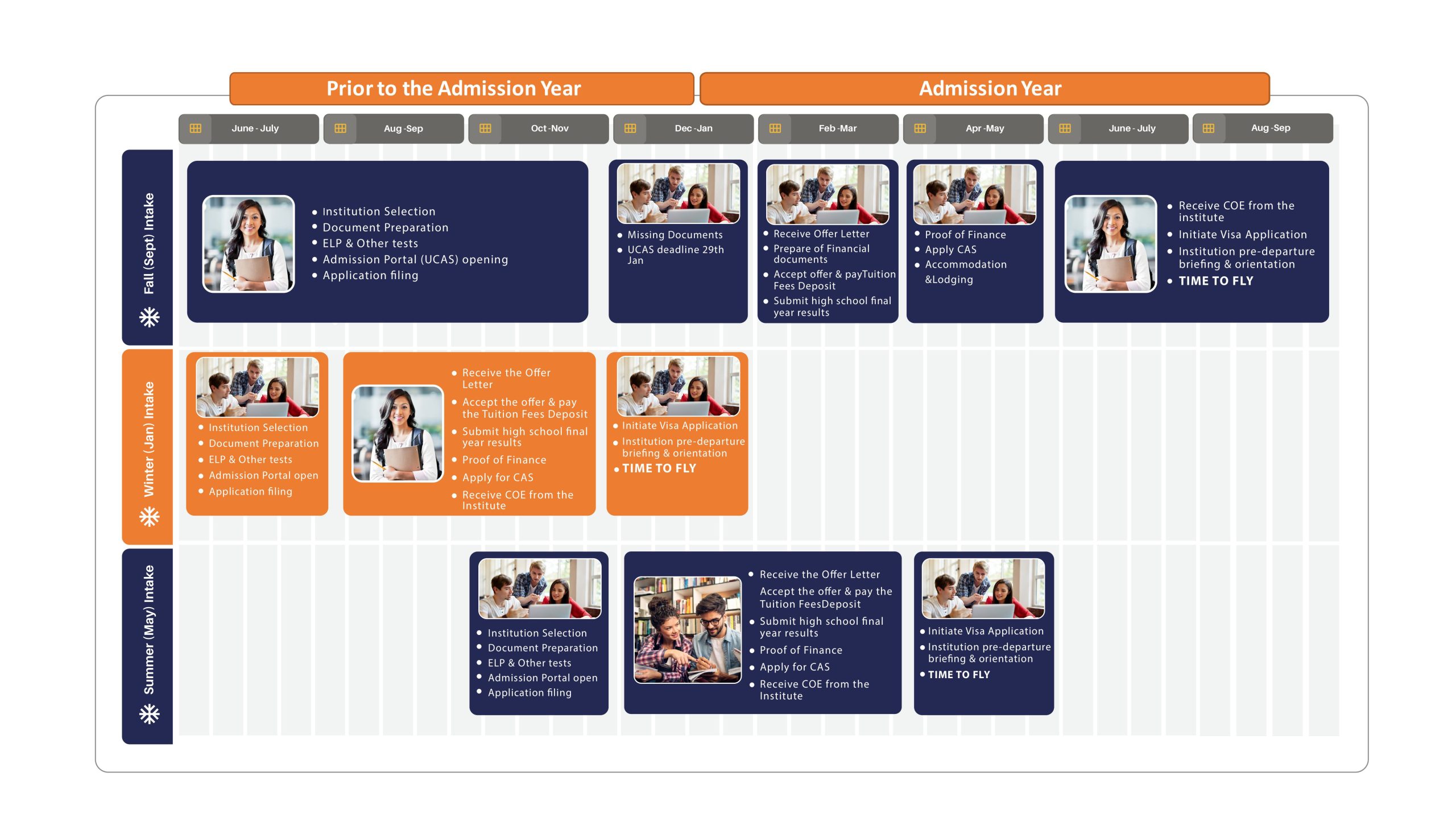
Academic Calendar
Understand key academic timelines to plan your study, travel, and visa processes effectively.
Skills
Skills In Demand
Graduate into globally competitive careers across dynamic and fast-growing industries
Software Development, AI, ML & Cybersecurity
Healthcare and Life Sciences
Business & Analytics
Engineering & Technical Trades
Education and Public Sector
Creative Industries and Digital Media
Partner
Partnering with Ireland’s Top-Tier Institutions





FAQs
Answers to Parents’ and students’ most asked queries
International students in Ireland can access a variety of scholarships, including:
- Government of Ireland International Education Scholarship – For Master’s, Postgraduate Diploma, and PhD students only; covers tuition + €10,000 stipend.
- University Merit Scholarships – Offered by universities like UCD, Trinity, DCU, UCC, UL, MTU, ATU for academic excellence.
- Subject-Specific Scholarships – For top performers in fields like engineering, business, science, or IT.
- Need-Based & Special Scholarships – For students with disabilities, refugees, or financial needs.
If you are an international student in Ireland, you can work up to 20 hours per week during term time and up to 40 hours per week during holidays. Full-time students do not need a separate work permit, and many degree programs also offer internships or placements to gain practical experience in your field.
Entry requirements differ depending on the university and the course. Generally, international students need to submit:
- Academic transcripts and certificates from high school (for undergraduate) or bachelor’s degree (for postgraduate).
- Proof of English language proficiency (such as IELTS, TOEFL, PTE, Duolingo, or equivalent).
- A personal statement explaining motivation and goals.
- Letters of recommendation or academic references.
- Some programmes may also require a CV/resume, research proposal (for research degrees), portfolio (for art/design), interviews, or additional assessments.
Yes. International students need a Long Stay ‘D’ Student Visa to study full-time in Ireland. You must have an official acceptance letter from a recognised Irish university, meet financial and English language requirements, and register with immigration on arrival to receive Stamp 2 permission.
The main intake in Ireland is September with some universities also offering January/February starts. It is recommended to apply 6–12 months in advance to allow sufficient time for admission processing, visa application, and pre-departure preparations.
Yes. The Third Level Graduate Scheme (Stamp 1G) allows non-EU/EEA students to stay in Ireland for up to:
- 2 years after completing a Master’s or PhD
- 1 year after completing a Bachelor’s degree
This gives graduates time to work, gain professional experience, or seek employment related to their field.
Yes. Most Irish universities require proof of English proficiency through tests like IELTS, TOEFL, or PTE Academic.
No. International students in Ireland are not covered by free public healthcare. You must have private health insurance, which is mandatory for visa purposes and protects you for medical treatment during your stay.
Irish universities provide comprehensive support, including:
- Academic support – Tutoring, writing centres, and language assistance
- Personal support – Counselling, student advisors, and wellbeing services
- Career services – CV guidance, internships, and job fairs
- International student offices – Help with settling in, accommodation, visas, and cultural adaptation
HAPPY CLIENTS, HAPPY US
Listen to what our happy and satisfied clients say about us
GET IN TOUCH
Get In Touch With Our Team of Expert Counsellors
Study Destinations
Choose from 14+ Leading Study Destinations
Study in
Canada
Study in Canada
Study in
USA
Study in USA
Study in
Australia
Study in Australia
Study in
New Zealand
Study in New Zealand
Study in
Ireland
Study in Ireland
Study in
UK
Study in UK
Study in
Germany
Study in Germany
Study in
Asia
Study in Asia
Study in UK from UAE
Why Select Glinks International as Your UK Education Consultant?
As you choose to study in the UK as a UAE national, a UK education consultant can either lead to a stressful and confusing journey, or it can be a successful and smooth sailing into your dream university. Glinks is the most popular global education consultancy, which is famous because of its enormous experience and reliable advice and has grown and made its name the largest and most experienced consultancy in the UAE. Glinks has increased through 15 plus years of experience, adding to the many years of trust building to assist the students planning to study in uk from UAE to be guided and aided culturally to meet the specific needs of the Middle Eastern students. The best thing that makes Glinks a premier education consultant in the UK is their tremendous track record. Their excellent 95 per cent success rate in securing the student visa is an attestation of their great track record. This high success rate shows that the consultancy has a comprehensive knowledge of the requirements in studying in UK and its carefulness in carrying out applications and visa processes.Educational Performance That Makes Your Qualifications Stand out.
The first one is the interesting fact that to have a UK degree on your list of skills and talents is as good as having a golden passport to success in your profession. The best UK universities like Oxford, Cambridge, Imperial College London, and the London School of Economics are not just learning institutions but are mythical places that have produced Nobel-winning scientists, political figures, and even radical scientists and Glinks has a host of other university and course choices.Opportunities for fast career development.
The United Kingdom is the sixth-largest economy in the world, based on the International Monetary Fund 2024 ratings. This financial strength is directly converted into a significant opportunity in the field of finance, technology, healthcare, and sustainability. It doesn't matter whether you are doing an undergraduate or a master degree in UK, you are focusing yourself at the centre of international business and innovation.Academic Preparation: Showing Your Academic High Achievement.
For Undergraduate Programs: The UK requirements of undergraduate admission include, as a rule, high school transcripts of good academic achievement, standardised tests where applicable, compelling personal statements of your reasons and your fit, and recommendation letters of teachers who can attest to your abilities and personality. For Your Master Degree in UK: UK requirements in postgraduate study usually consist of a bachelor's degree in a recognised field, a transcript of ongoing academic development, research proposals or purpose statements detailing your academic or professional interest, professional references or academic references and in some cases, portfolios or work samples showing demonstrations of your practical skill. The UK education consultant at Glinks has a close understanding of what the admission committees of the best universities in the UK are interested in in the applications. They also help in preparing documents, submitting applications, and making follow-ups so that a smooth process is made and your qualifications can be placed strategically to have the best chances of acceptance.English Language Proficiency: Linguistic Competence Establishment.
Most universities demand written evidence of proficiency in the English language by administering standardised tests to most of them. The most common tests are IELTS, TOEFL, PTE Academic and Cambridge English qualifications; however, other institutions will accept other documentation as long as you have undergone past training in the English medium of instruction. In case the students intending to study in UK are based in The UAE, your UK education consultant at Glinks would recommend the best preparation courses and testing strategies that best suit your target leading universities in UK. Most of the institutions would have a minimum IELTS score of between 6.5 and 7.5 based on the course and level of study.Scholarship Support and Financial Requirements.
Financial viability is also an important aspect of the study as required by UK. The potential students need to show an ability to meet tuition fees and the cost of living over their period of study. Glinks offers numerous services such as free academic services, profile designing, career guidance, scholarship, housing and travel services. Glinks assists in finding possible scholarships and also aids in the application in order to increase the possibility of receiving financial aid. This is a full scholarship program that can greatly help in alleviating the cost of taking your master degree in UK or an undergraduate course.Student Visa Requirement: Obtaining Your Entry Visa.
A UK Student Visa is required by international students who want to study in UK. However, there are a series of vital papers required during the application: Confirmation of Acceptance for Studies; a licensed institution, a valid passport with sufficient validity period, documented English language proficiency, full financial evidence, tuberculosis test results for candidates of certain countries, visa application fees and Immigration Health Surcharge. Your UK education consultant at Glinks is your priceless source during this process. Glinks assists in the whole process of visa, such as completion of applications, financial statements and guidance and training in mock interviewing. This thorough planning simply adds up to the high visa success rate of 95 per cent of Glinks.Life as an international student when you study in UK.
Knowledge of what to reasonably expect when you study in UK helps in better preparation and maximising your international education experience. Your Glinks education consultant in the UK provides you with all the preparation needed in this transition. Accommodation Choices: Creating a Home that You Would Like.- On-Campus Residences
- Off-Campus Housing
- Purpose-built Student Accommodations.
Access to Healthcare: Full Medical Insurance.
International students who pay the Immigration Health Surcharge during their visa processing are entitled to access to the National Health Service during the duration of their stay in the UK. The NHS is one of the best global systems of public healthcare, and more than ninety five percent of international students indicate that they are satisfied with NHS services. This covers general practitioner visits, hospital visits and emergency health services, which will ensure that you are confident during your studies in UK.Part-Time Employment Opportunities: Academic-Professional Development.
Valid holders of UK Student Visas are allowed to work part-time of up to twenty hours per week during term times and full-time during holidays. This presents great chances to work, earn and boost personal finances, work as a professional, and create local networks. Most degree programs also facilitate internships or placement programs, which allow the students to have industry-specific knowledge which is directly related to their subjects.Timeline Application to Study in UK with Glinks.
Applications to study in the UK through the UAE must be well-timed to be successful. Your education consultant at Glinks in the UK takes you step-wise through the process, without missing any of the deadlines or requirements in your desired choice of top UK universities.- Research
- Application
- Final Decision
- Visa Procedure
- Pre-Departure Phase (One to three months before)