
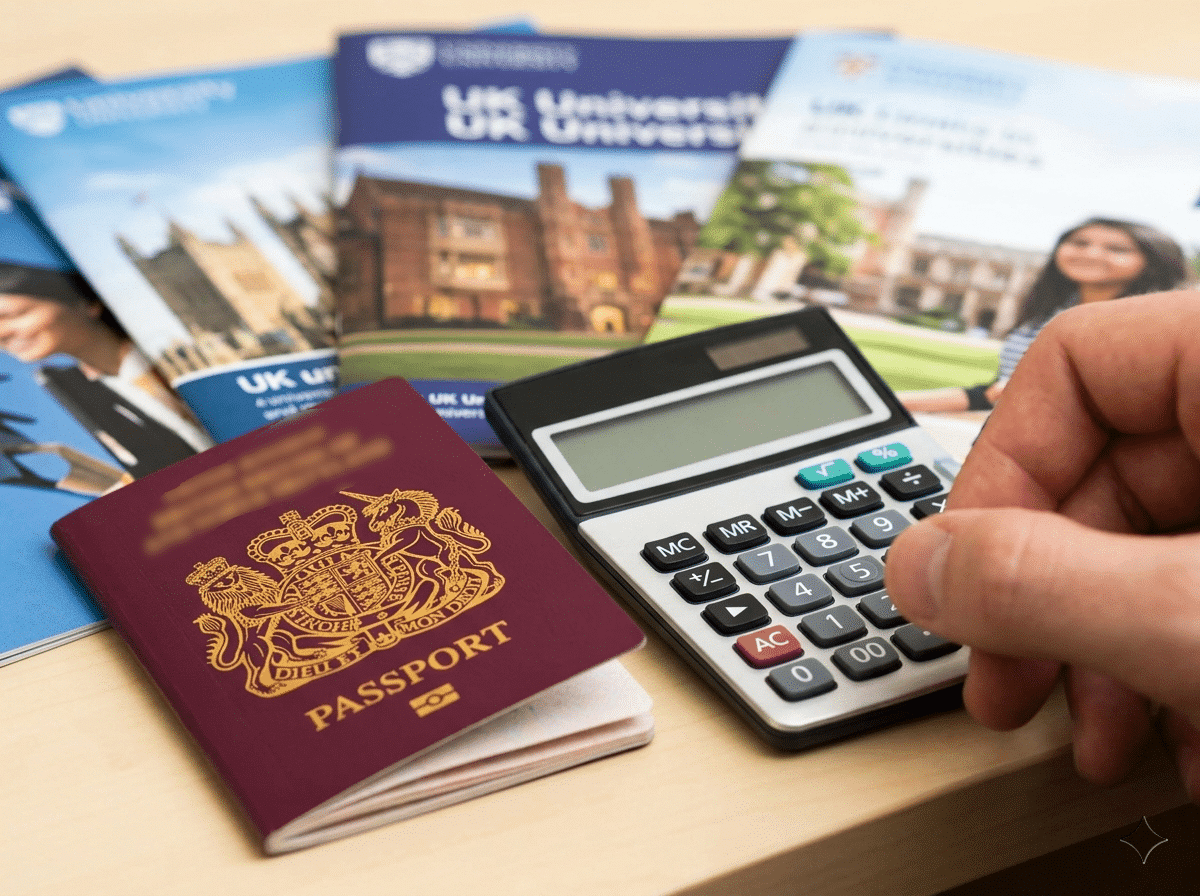

Answer Snapshot:
Studying in the UK in 2027 costs tuition plus living costs. International undergraduate tuition commonly ranges from about £15,000 to £40,000 a year, and higher for medicine. For a Student visa you must show living funds for up to 9 months: £1,570 a month in London or £1,203 a month elsewhere for applications made on or after 30 November 2026, plus any unpaid tuition. You also pay the visa fee and the Immigration Health Surcharge.
The UK is attractive for students from the UAE and the Gulf because most bachelor’s degrees take three years and many master’s degrees take one year. That shorter length lowers the total cost. This guide explains tuition, the new living cost amounts for the Student visa and the other costs to plan for in 2027.
Cost of studying in the UK 2027 at a glance
| Cost | Amount | Notes |
|---|---|---|
| Undergraduate tuition | About £15,000 to £40,000 per year | Medicine and clinical degrees cost more |
| Master’s tuition | About £15,000 to £35,000+ for the course | Most taught master’s degrees last one year |
| Living funds, London | £1,570 per month, up to 9 months (£14,130) | For applications on or after 30 November 2026 |
| Living funds, outside London | £1,203 per month, up to 9 months (£10,827) | For applications on or after 30 November 2026 |
| Visa fee and health surcharge | Student visa fee plus the Immigration Health Surcharge per year | Check current amounts on GOV.UK |
Tuition fees in the UK
Tuition depends on the university and the subject. Laboratory, engineering and clinical subjects usually cost more than humanities or business. Because many bachelor’s degrees in England, Wales and Northern Ireland take three years, the total cost can be lower than a four-year degree elsewhere. Scottish bachelor’s degrees usually take four years.
The new living cost amounts for the Student visa
From 30 November 2026, Student visa applicants must show £1,570 a month for courses in London or £1,203 a month outside London, for up to 9 months. Before that date the amounts were £1,529 and £1,171. The date you apply decides which amount applies. You must also show any tuition you have not yet paid.
- Keep the money in your account for the required period before you apply.
- If you paid accommodation fees to the university, you may be able to deduct part of them; check your CAS.
- Read the official guidance on GOV.UK before you apply.
Other costs to budget for
| Item | How to estimate |
|---|---|
| Accommodation | University halls or private rent; London costs more |
| Visa application fee | Check the current Student visa fee on GOV.UK |
| Immigration Health Surcharge | Paid per year of your visa; gives access to the NHS |
| Deposit | Many universities ask for a tuition deposit to issue the CAS |
| Flights and arrival costs | Return flight, bedding, phone and transport card |
How to lower the cost of studying in the UK
- Choose a one-year master’s degree where it fits your career plans.
- Compare cities: living costs outside London are much lower.
- Apply for scholarships early. See our UK scholarships guide.
- Check early payment discounts some universities offer on tuition.
Frequently asked questions
How much money do I need for a UK Student visa?
For applications from 30 November 2026: £1,570 a month in London or £1,203 a month elsewhere, for up to 9 months, plus unpaid tuition.
Does the new amount apply if my CAS was issued earlier?
The application date decides the amount. If you apply on or after 30 November 2026, the new amounts apply.
Is studying in the UK cheaper than Canada or Australia?
It can be, because degrees are often shorter. Compare the total course cost, not the yearly fee.
Can I work while studying in the UK?
Students on degree courses can usually work part-time during term. Check the limits on your visa.
Plan your UK budget with Glinks
Glinks can compare universities by total cost, check deadlines in our UK application deadlines guide and prepare your visa funds checklist.




One Response